Reviewing the Peace Out Homeschool SVG for Real Embroidery
As a designer who spends half my life staring at digitized paths and the other half pulling threads out of jammed machines, I approach every new machine embroidery design with a healthy dose of skepticism. We have all been there: you download a cute graphic, load it onto your hoop, and watch in horror as the fabric puckers or the text becomes an illegible blob. That is why I took a close look at the Peace out Homeschool Svg to see if it holds up under the needle or if it is just another pretty picture meant for vinyl cutters.
This particular file sits at the intersection of Crafts and digital Graphics, which means its utility depends entirely on how you translate those vector lines into thread. The quote itself carries a specific cultural weight. It is playful, slightly rebellious, and deeply relatable to the modern homeschooling community. But does the visual layout support that attitude when stitched onto a textured surface? Let us break it down from a practical, stitch-by-stitch perspective.
First Impressions and Visual Personality
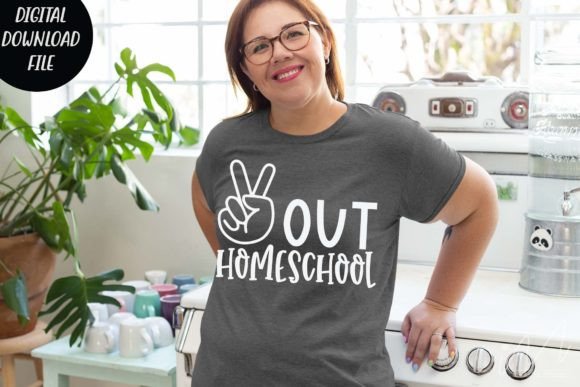
The first thing I noticed about the Peace out Homeschool Svg is its clean, bold structure. In the world of embroidery, simplicity is often sophistication. Complex gradients and tiny serifs rarely survive the transition from screen to fabric. This design relies on strong shapes and clear typography, which is exactly what you want for high-impact stitching. The mood is casual and confident, making it an ideal candidate for items that need to speak loudly without shouting.
When I visualize this as a finished product, I do not see it getting lost in busy patterns. It demands space. The layout suggests a design that works best when centered and given room to breathe. For an Etsy seller or small shop product creator, this visual clarity is a massive advantage. Customers scrolling through thumbnails need to read the message instantly. A cluttered design fails that test; this one passes with flying colors.
Real-World Application: The Tote Bag Test
To truly evaluate any embroidery file, you have to imagine it on a specific item. I pictured this design on a heavy-duty canvas tote bag design. Canvas is unforgiving. It has a coarse fabric texture that can swallow thin lines. Because the Peace out Homeschool Svg features substantial lettering, it would likely stitch out beautifully here. The bold strokes would bridge the gaps in the weave, creating a crisp, professional look that feels durable and high-value.
I also considered it for sweatshirt embroidery. A fleece or cotton-blend hoodie provides a soft, plush background that contrasts nicely with the sharp edges of the text. However, this is where you must be careful. Sweatshirts are thick. If you are using this as a digital embroidery file source for a large back print, you need to ensure your machine can handle the density. If the original SVG is converted into a dense fill stitch pattern without proper underlay, you will end up with a stiff, cardboard-like patch on the chest. My advice? Use this design for left-chest logos or sleeve accents on apparel to keep the garment comfortable.
Navigating Technical Challenges
While the design is strong, it is not without its pitfalls for the unprepared stitcher. Since this is provided as an SVG, DXF, EPS, and PNG, you are likely responsible for the digitizing process or using auto-digitizing software. This is a critical distinction. Auto-digitizing often creates excessive stitch density and poor pathing. If you are converting this yourself, pay close attention to the corners of the letters. Sharp angles in an SVG can turn into thread nests if not properly programmed with tie-offs and travel stitches.
Another area of caution is small hoop size applications. If you attempt to shrink this design for a baby embroidery project, such as a onesie or a small bib, you risk losing legibility. The phrase "Peace out" requires a certain minimum width to remain readable. Do not force this design into a 4x4 inch hoop unless you are certain the text remains clear. For smaller items, consider simplifying the design or using it as an applique design base, where fabric pieces fill the shapes rather than thousands of satin stitches.
Dark fabrics present another challenge. If you are stitching this onto a navy or black garment, you must prioritize thread colors with high contrast. A white or bright yellow thread would pop, but you must ensure your stabilizer is visible enough to guide you during placement, yet removable enough not to leave residue. Always test on scrap fabric first. Check how the satin stitch borders interact with the fill. If the border is too wide, it may overlap the fill unnecessarily, adding bulk without adding beauty.
Commercial Viability and Brand Trust
For commercial embroidery professionals and craft business owners, consistency is key. The Peace out Homeschool Svg offers a versatile asset that can be adapted across multiple product lines. Imagine offering a matching set: a tote bag for the mom, a cap for the dad, and a pillow cover for the living room. This kind of cohesive branding builds customer trust. When a buyer sees that your stitching is clean and the design is well-executed, they are more likely to return for future personalized gift needs.
However, professionalism extends beyond the stitch. You must verify the licensing terms. Just because you have the SVG does not automatically grant you the right to sell unlimited physical goods or digital derivatives. Always confirm whether the license allows for commercial use on finished items. Many designers allow small batch sales but restrict mass production. Protecting your handmade product reputation means respecting intellectual property rights.
Practical Designer Notes for Success
Before you commit to a full production run, take these steps to ensure quality:
- Test on Scrap Fabric: Never stitch directly on your final garment. Use the same type of fabric and stabilizer you plan to use for the client order.
- Check Thread Contrast: View your design in black and white mockups. If the details disappear in grayscale, they will likely get lost in low-light conditions or on busy fabrics.
- Inspect Small Details: Zoom in on the SVG. Are there tiny isolated points or hairline fractures in the paths? These can cause needle breaks or thread jams.
- Confirm Hoop Size: Ensure the design fits comfortably within your hoop with adequate margin for clamping.
- Evaluate Stitch Density: If you are digitizing this, reduce the density for stretchy fabrics to prevent distortion. For stable fabrics like canvas, you can afford a tighter stitch count.
In conclusion, the Peace out Homeschool Svg is a promising asset for the right project. It captures a timely sentiment with a visual style that translates well to thread, provided you respect the technical limitations of embroidery. Whether you are creating a holiday embroidery gift or stocking your online store with custom apparel, this design can elevate your offerings. Just remember: the file is only as good as the hands that stitch it. Take your time, test thoroughly, and let the quality of your work speak for itself.