Reviewing One Lucky Cousin SVG for Embroidery
As a designer who spends half my life digitizing and the other half stitching, I have learned to look past the glossy preview images. When a file lands on my desktop, I am not just looking at pixels; I am visualizing thread tension, fabric pull, and the final tactile experience of a finished product. Recently, I evaluated the One Lucky Cousin Svg to determine its viability for real-world commercial and personal projects. This is not just a graphic asset; it is a potential cornerstone for a niche line of personalized gifts.
First Impressions and Visual Personality
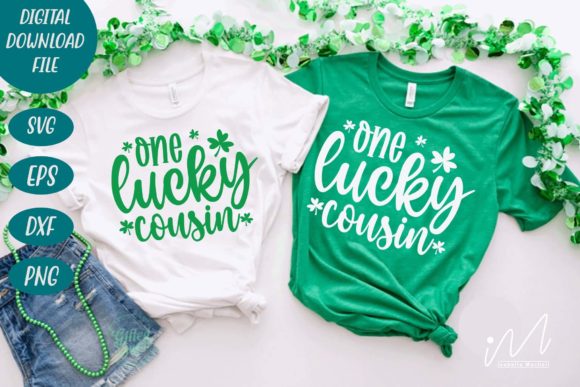
The phrase “One Lucky Cousin” carries an immediate emotional weight. It is playful, affectionate, and slightly humorous, which makes it perfect for family-centric occasions. Visually, the design relies on clean typography rather than complex illustration. For an embroidery designer, this is both a blessing and a challenge. The lack of dense imagery means the focus shifts entirely to letter spacing, font weight, and stitch clarity.
In its raw form as a Graphics asset within the Crafts category, the layout appears balanced. However, because this is provided as an SVG, DXF, EPS, and PNG Transparent file, the responsibility for translation into a machine embroidery design falls largely on the user or the digitizer. If you are using auto-digitizing software, caution is advised. Auto-digitizers often struggle with the thin crossbars of letters, potentially creating weak running stitch paths that may unravel after washing. My recommendation is to manually adjust the stitch types, converting thick strokes to fill stitch areas and keeping delicate serifs as satin or running stitches depending on the size.
Real-World Application: The Custom Sweatshirt Test
To truly test the versatility of One Lucky Cousin Svg, I simulated a project for a client requesting custom family reunion apparel. The goal was a coordinated look for cousins, with this specific design featured on the back of a mid-weight cotton sweatshirt. This scenario highlights several critical factors for any Etsy seller or small shop product creator.
On a curved surface like a sweatshirt chest or back, text readability is paramount. The design’s simplicity works in its favor here. Unlike intricate applique design work that requires multiple layers and trims, this text-based graphic allows for a quicker production time. However, the width of the letters must be sufficient to hold a satin stitch without becoming too bulky. If the design is scaled down too far for a left-chest logo, the letters may merge. I found that maintaining a minimum height of 1.5 inches ensures that each character remains distinct, preserving the professional look required for commercial embroidery.
Ideal Projects for This Design
Based on its typographic nature, this design excels in specific categories. It is not a one-size-fits-all solution, but it is highly effective for:
- Tote bag design: The flat surface of canvas bags allows for larger scaling, making the text bold and readable from a distance.
- Baby embroidery: When applied to onesies or burp cloths, the sentiment is adorable. However, ensure the stitch density is lowered to prevent stiffness against sensitive skin.
- Holiday embroidery: Perfect for Christmas morning photos or Easter baskets, adding a personal touch to seasonal traditions.
- Embroidered patch: Creating a standalone patch allows for heavy stabilizer use, ensuring durability even if the base garment is delicate.
Navigating Technical Challenges
While the concept is strong, the execution requires attention to detail. Since the product description notes that you can change color and size with appropriate software, you have control over the output. Yet, this freedom comes with risks. When working with dark fabric, a light-colored thread is necessary for contrast, but you must ensure the underlying fabric does not peek through the stitches. A proper underlay is non-negotiable here.
Furthermore, consider the hoop size. If you are stitching this on a cap, the curvature limits the usable area. You may need to break the design into smaller segments or reduce the size significantly. On stretchy fabrics like jersey knits, a cut-away stabilizer is essential to prevent distortion. Without it, the “One Lucky Cousin” text could pucker, ruining the aesthetic of what should be a high-quality handmade product.
Another consideration is the file format. While SVG and DXF are excellent for cutting machines like Cricut or Silhouette, they are not native embroidery files. If you are an embroidery designer converting these vectors, you must check for closed shapes and smooth nodes. Jagged edges in the vector will translate to jagged stitches. Always inspect the pathing before sending it to the machine.
Enhancing Brand Value and Customer Trust
For creative entrepreneurs and digital product sellers, the perceived value of a item is tied to its presentation. A well-stitched One Lucky Cousin Svg signals professionalism. It shows that you understand proportion and thread choice. When customers see clean edges and consistent tension, their trust in your brand increases. This is crucial for custom apparel businesses where repeat buyers are driven by quality consistency.
Moreover, this design lends itself well to printable mockup creation. Before stitching a single thread, you can visualize the design on various backgrounds. Use these mockups in your Etsy listings to show potential buyers how the text looks on different colors. This reduces hesitation and can increase conversion rates. Remember, the digital embroidery file is just the starting point; the final perception is shaped by the physical result.
Practical Designer Notes
Before committing to a large batch of craft business inventory, follow these steps:
- Test on scrap fabric: Always run a test stitch-out on the same material you intend to use for the final product. Check for thread breaks and registration issues.
- Check thread color contrast: Ensure the thread stands out against the fabric. High contrast improves readability, especially for smaller items like baby clothes.
- Review stitch density: Too dense, and the fabric puckers; too sparse, and the background shows. Adjust your digitizing settings accordingly.
- Confirm hoop size: Make sure the design fits comfortably within your machine’s hoop, leaving room for stabilization.
- Inspect small details: Zoom in on the vector file. Are there any stray points or overlapping paths that could cause stitching errors?
- Verify licensing: Although this is a digital asset, always confirm the license terms. Can you sell finished items? Can you resell the digital file? Clarity here protects your small business merchandise from legal issues.
In conclusion, One Lucky Cousin Svg is a versatile asset for those willing to put in the technical legwork. It is not a plug-and-play solution for every machine, but with careful digitizing and thoughtful application, it can become a bestseller in your boutique branding lineup. Treat it with the respect a good design deserves, and it will reward you with happy customers and durable, beautiful products.