Reviewing the Tenth Grade Crew Halloween SVG for Embroidery
As a designer who spends half my life digitizing files and the other half stitching them out, I have learned to look past the glossy preview images. When I first encountered the Tenth Grade Crew Svg, Halloween T Shirt design, my immediate reaction was not just about the aesthetic appeal of the quote, but about its structural integrity as a potential embroidery asset. This is a piece of digital art categorized under Crafts and Graphics, but for those of us running small shops or fulfilling custom orders, it represents a tangible product challenge. The question is not just whether it looks cute on a screen, but whether it translates effectively into thread on fabric.
First Impressions and Visual Personality
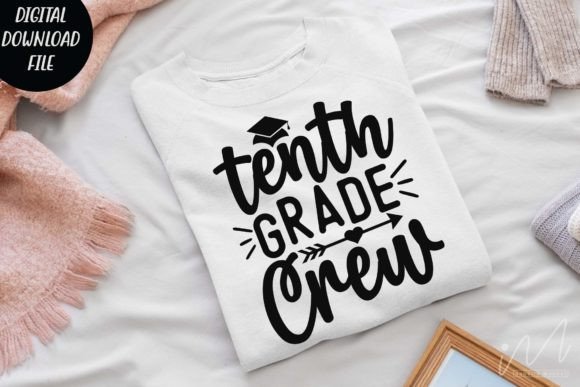
The design centers around the phrase “Tenth grade crew,” which immediately sets a nostalgic, cohort-specific tone. Adding the Halloween element suggests a seasonal twist, likely involving spooky typography or thematic icons like pumpkins, ghosts, or bats integrated with the text. From a layout perspective, this type of design relies heavily on legibility. In embroidery, unlike print, we are dealing with texture and dimension. My first impression was that this design carries a playful, youthful energy that fits perfectly into the realm of personalized gifts and custom apparel. It feels less like a high-end luxury brand asset and more like a fun, community-driven graphic ideal for school spirit events, family matching outfits, or boutique holiday merchandise.
The visual personality is bold and declarative. For an embroidery project, this is generally a good sign. Bold designs tend to hold up better against the natural distortion that occurs when needle penetrates fabric. However, the devil is always in the details. If the Halloween elements are too intricate—think tiny spiderwebs or fine skeletal details—they may get lost in the stitch pattern. As a reviewer, I look for clean lines and sufficient spacing between elements to ensure the final stitched product does not look like a muddy blob from three feet away.
Real-World Application: The Sweatshirt Test
To truly evaluate this file, I mentally placed it on a standard cotton-blend sweatshirt, a staple for any craft business during the autumn months. Imagine a customer ordering a set of matching hoodies for a group of friends celebrating their tenth-grade reunion or a current class preparing for a spooky season event. The Tenth Grade Crew Svg, Halloween T Shirt design would sit prominently on the chest or perhaps across the upper back.
In this scenario, the design’s performance depends on how well the text balances with any graphical icons. If the SVG includes complex Halloween graphics, I would be cautious about using a satin stitch for large areas, as it can pull on lighter fabrics. Instead, a fill stitch might be necessary for larger shapes, while running stitches could define finer outlines. The key here is maintaining the crispness of the lettering. “Tenth grade crew” needs to be readable. If the font chosen in the original graphic has thin serifs or overly decorative swashes, these are red flags for embroidery. They often require manual digitizing adjustments to thicken lines and prevent thread breaks or poor coverage.
Fabric and Hoop Considerations
When working with this type of graphic, fabric choice is critical. A structured fabric like denim or heavy canvas works beautifully for tote bag designs or embroidered patches, providing a stable base for the stitches. However, if you are applying this to a stretchy t-shirt or a thin baby onesie, the stability becomes a concern. The design must be scaled appropriately for the hoop size. A common mistake among new Etsy sellers is trying to cram a detailed design into a small 4x4 inch hoop. For a phrase like “Tenth grade crew,” you likely need at least a 5x7 inch hoop to ensure the letters are large enough to be legible without becoming so dense that they stiffen the garment uncomfortably.
Textured fabrics present another challenge. If you are stitching this onto a fuzzy fleece or a waffle-knit towel, the small details of any Halloween icons might disappear into the pile. In such cases, simplifying the design or increasing the stitch density slightly can help the image pop. Always test the design on scrap fabric first. This is non-negotiable professional advice. What looks perfect in a digital embroidery file preview can behave differently once the needle hits the material.
Commercial Viability and Brand Consistency
For small business owners and handmade shop operators, the commercial viability of a design like this hinges on its versatility. Can it be used for more than just t-shirts? Absolutely. This design could easily translate into an applique design for a pillow cover, where fabric pieces are layered to create the Halloween theme, reducing stitch count and adding texture. It could also work as a festive accent on kitchen towels or aprons, appealing to customers looking for holiday embroidery that is both functional and decorative.
However, brand consistency is key. If your shop specializes in minimalist, modern aesthetics, this playful, themed graphic might clash with your existing lineup. But if your brand focuses on fun, personalized, and seasonal items, this asset fits right in. It enhances buyer engagement because it taps into specific social identities (the “tenth grade crew”) and seasonal trends (Halloween). This specificity drives sales because customers feel seen and represented.
Technical Checks Before Stitching
Before committing to a full production run, there are several technical aspects to verify. Since the product description mentions receiving SVG, DXF, EPS, and PNG formats, it is crucial to understand that these are primarily cut files for vinyl or print, not necessarily native machine embroidery formats like PES or DST. Unless explicitly stated, you may need to use embroidery software to convert or trace these vectors into a stitch file. This step is vital. Automatic conversion often results in poor stitch paths, excessive jump stitches, and incorrect underlay.
Check the thread colors carefully. Halloween themes often rely on high contrast—orange and black, purple and green. Ensure your thread palette offers enough contrast against the fabric background. Stitching orange thread on a dark brown shirt, for example, might lack visibility. Use proper stabilizer, especially if working with stretchy knits or lightweight cottons. A cut-away stabilizer is usually best for garments that will be washed frequently, ensuring the design remains intact and does not pucker over time.
Finally, always confirm licensing terms. Just because you purchased the digital embroidery file or graphic asset does not automatically grant you the right to sell finished products commercially, though many designers do allow it. Read the terms carefully to protect your craft business from legal issues. If the license allows commercial use, this design can be a valuable addition to your inventory, offering a quick turnaround for custom orders during the busy holiday season.
In conclusion, the Tenth Grade Crew Svg, Halloween T Shirt design holds promise for those who understand the nuances of translating vector graphics into thread. It is not just a file; it is a component of a larger creative process. With careful attention to digitizing, fabric selection, and stitching technique, it can result in a high-quality, memorable finished product that delights customers and strengthens your reputation as a skilled maker.