Reviewing the Resting Nurse Face SVG for Embroidery
As a designer who has spent countless hours digitizing files and testing them on various fabrics, I approach every new Resting Nurse Face Svg with a critical eye. It is not enough for a design to look cute on a screen; it must translate seamlessly into thread, holding up under the tension of the needle and the wear of daily life. This particular graphic, featuring the popular quote “resting nurse face,” presents an interesting challenge and opportunity for embroidery professionals and hobbyists alike. While the product description lists it primarily as an SVG, DXF, EPS, and PNG cut file, its potential in the realm of machine embroidery is significant if handled with the right technical approach.
First Impressions and Visual Personality
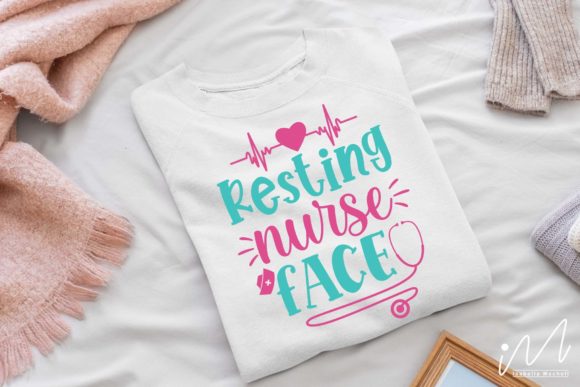
The immediate mood of this design is one of relatable exhaustion mixed with dry humor. For healthcare workers, the “resting nurse face” is a well-known phenomenon—a neutral expression that patients or colleagues might misinterpret as anger or boredom, when it is simply fatigue. Capturing this sentiment requires a balance of boldness and subtlety. Visually, the layout tends to rely on strong typography paired with a simple, expressive icon. In the context of Crafts and digital Graphics, this simplicity is a strength. Complex gradients or ultra-fine details often get lost in translation when moving from vector paths to stitched threads. The clean lines suggest that this design will maintain its integrity even when scaled down, provided the stitch density is managed correctly.
Real-World Application: The Custom Tote Bag Scenario
To truly evaluate the utility of this file, I imagined a specific client project: a custom embroidered tote bag for a group of nursing graduates. The goal was to create a handmade product that felt professional yet personal. Using the Resting Nurse Face Svg as the base, I considered how the design would sit on a heavy canvas fabric. Canvas has a distinct texture that can interfere with small details. Because this design relies heavily on text and a central graphic element, it avoids the pitfall of getting lost in the weave. However, since the source file is a cut file rather than a native embroidery format like PES or DST, the digitizer must manually assign stitch types. I would recommend using a combination of satin stitch for the smaller graphical elements and a tight fill stitch for larger areas if the design permits, ensuring the text remains legible without becoming too dense.
Apparel and Wearable Projects
Beyond tote bags, this design shines in custom apparel. Imagine it embroidered on the left chest of a scrub cap or the back of a cozy fleece jacket. For sweatshirt embroidery, the plush texture of the fabric requires a higher pile stabilizer to prevent the stitches from sinking in. The humor of the phrase makes it an ideal personalized gift for nurses who appreciate self-deprecating wit. When applied to darker fabrics, which are common in medical scrubs, ensuring high contrast with the thread colors is vital. A bright white or neon yellow thread against navy blue scrubs ensures the message is readable from a distance, enhancing the visual appeal and immediate recognition of the joke.
Technical Considerations for Embroiderers
It is crucial to note that the product provides SVG, DXF, EPS, and PNG formats. These are vector and raster image files, not machine-ready embroidery files. This distinction is vital for any Etsy seller or craft business owner. You cannot load an SVG directly into most embroidery machines without prior digitization. This means you must either use auto-digitizing software, which often yields poor results for text-heavy designs, or manually digitize the file using professional software. If you choose to digitize it yourself, pay close attention to the stitch density. Overly dense stitching on a small area can cause puckering, especially on lighter fabrics like cotton tees or baby clothes.
For those creating an embroidered patch, this design is excellent. Patches allow for higher stitch counts and denser fills because they are stabilized by a stiff backing. You can experiment with applique design techniques here, perhaps using a contrasting fabric for the face element to reduce stitch count and add texture. This approach also reduces the risk of distortion on stretchy materials. Always test the design on scrap fabric first. Check how the running stitch outlines hold up and whether the corners of the letters remain sharp after washing.
Navigating Fabric and Hoop Constraints
Where should you use this design carefully? Small hoop sizes, such as 4x4 inches, may require scaling down the text to the point of illegibility. If the quote is long, ensure your hoop size is large enough to accommodate the full phrase without cramping. Textured fabrics like terry cloth towels or waffle-weave blankets can obscure fine details. In these cases, increasing the stroke width of the vector paths before digitizing can help maintain clarity. Additionally, be cautious with curved surfaces like caps. The curvature can distort the perception of the text, so a slight arch in the digitizing layout might be necessary to keep the “resting nurse face” message straight and readable.
Commercial Viability and Brand Consistency
For small shop product lines, consistency is key. This design fits well within a broader collection of healthcare-themed items. It appeals to a specific niche, making it a strong candidate for holiday embroidery gifts, such as Nurse Appreciation Week or Christmas presents for hospital staff. The professional presentation of the finished item builds customer trust. A cleanly stitched design with no loose threads or puckering signals quality. When creating printable mockup images for your online store, use high-resolution PNGs included in the package to showcase the design on various backgrounds before you even stitch a single thread. This helps buyers visualize the finished product and increases engagement.
Final Verdict for Designers
The Resting Nurse Face Svg is a versatile asset for any designer working in the healthcare niche. Its strength lies in its emotional resonance and simple visual structure. However, its success depends entirely on the skill of the digitizer and the choice of materials. Always confirm licensing terms before selling commercial embroidery items made from this design. While the file formats provided are standard for cutting machines, transforming them into high-quality embroidery requires thoughtful adjustment of stitch types, underlay, and pull compensation. By treating this graphic not just as a clipart element but as a structural component of a textile design, you can create memorable, durable, and humorous products that resonate with your audience. Whether for a tote bag design or a detailed baby embroidery project, this design offers a solid foundation for creative exploration.