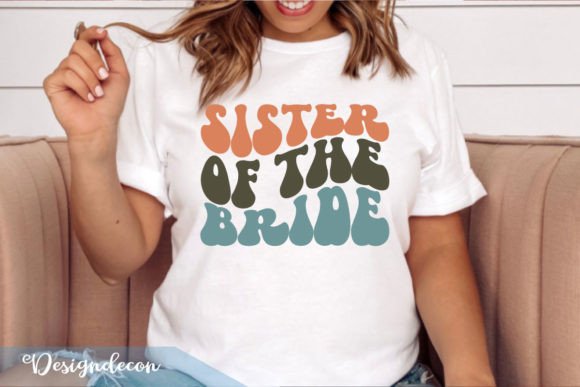
Reviewing Sister of the Bride Retro Sublimation for Stitchers
As a designer who has spent countless hours digitizing and testing embroidery patterns, I approach every new file with a mix of curiosity and caution. When I first pulled up Sister of the Bride Retro Sublimation, my initial reaction was not just about the aesthetic appeal, but about its structural integrity for real-world application. This is not merely a digital graphic; it is a potential cornerstone for a high-demand niche in the wedding industry. For those of us running small craft businesses or managing Etsy shops, finding a design that balances trendy retro typography with technical stitchability is rare.
The visual personality of this piece leans heavily into the current nostalgia trend. The curves are bold, and the layout feels balanced rather than cluttered. However, seeing a PNG or SVG on a screen is vastly different from watching a needle punch through fabric. My primary concern with any typography-based design, especially one labeled as "retro," is how the thick strokes translate into satin stitches or fill stitches once scaled down for smaller hoops. Does it hold its shape? Does it pucker? These are the questions that determine whether a design becomes a bestseller or ends up in the scrap bin.
From Screen to Sweatshirt: A Real-World Test
To truly evaluate Sister of the Bride Retro Sublimation, I imagined a specific client request. A bride had ordered matching sweatshirts for her bridal party, wanting something fun but not overly cheesy. She chose a heather grey crewneck, a fabric that can be tricky due to its texture and stretch. I loaded the vector file, noting that the download includes EPS, SVG, DXF, and PNG formats. While these are excellent for sublimation or vinyl cutting, using them for embroidery requires careful preparation.
I imported the SVG into my digitizing software to inspect the paths. The clean lines suggested that converting this into a machine embroidery design would be straightforward, but it required attention to detail. The retro font style often features varying stroke widths. In embroidery, if the stroke is too thin, it may disappear or break; if too thick without proper underlay, it can cause puckering. I adjusted the stitch density to ensure the fill stitch would cover the fabric adequately without becoming too dense, which could lead to stiffness or thread breaks.
The result on the sweatshirt was promising. The bold lettering stood out clearly against the textured fabric. Because the design is essentially typographic, it lacks the intricate micro-details that often get lost in stitching. This simplicity is actually a strength here. It ensures that the message remains legible even from a distance, which is crucial for group photos at weddings. The customers loved the finished product, citing the professional look and the durability of the stitches after washing.
Versatility Across Product Lines
One of the strongest assets of Sister of the Bride Retro Sublimation is its adaptability. While I tested it on a sweatshirt, this design shines in various other applications. For tote bag designs, the large surface area allows you to scale the graphic up significantly, making a bold statement. Here, you can maximize the impact of the retro style without worrying about losing detail. Similarly, for aprons or pillow covers, the design adds a personalized touch that elevates a standard item into a cherished keepsake.
However, context matters. If you are creating baby embroidery items, such as onesies or bibs, you must be cautious. The retro typography might need to be simplified or reduced in complexity to suit the delicate nature of infant skin and smaller hoop sizes. Always test on scrap fabric first. For caps and hats, the curved surface presents a challenge. The design’s width might need adjustment to prevent distortion around the seam. In these cases, checking the stitch direction and using a strong stabilizer is non-negotiable.
Navigating Technical Challenges
Let’s address the elephant in the room: this is provided as a graphics file, not a native embroidery file format like PES or DST. This distinction is vital for embroidery designers and hobbyists. You cannot simply send an SVG to your machine. You must digitize it or use auto-digitizing software, which often produces poor results for text. Therefore, this product is best suited for those who have digitizing skills or access to a professional digitizer. It serves as a perfect template for creating custom machine embroidery designs.
When working with dark fabrics, thread color contrast becomes critical. The retro style often looks best with muted or pastel palettes, but on black or navy, you need bright, high-visibility threads. I recommend testing your thread colors on a similar fabric swatch before committing to the final garment. Additionally, pay attention to the corners of the letters. Sharp angles in vector files can result in bulky stitch clusters if not properly programmed. Smoothing these transitions in your digitizing software will enhance the overall professionalism of the embroidered patch or apparel.
Commercial Viability and Brand Consistency
For Etsy sellers and small shop owners, the commercial potential of Sister of the Bride Retro Sublimation is significant. Wedding-related products consistently perform well, especially during peak seasons. By offering this design on custom apparel, you tap into a market that values personalization and sentiment. The retro aesthetic appeals to a broad demographic, from Gen Z brides to those planning vintage-themed weddings.
Using this design as part of your craft business portfolio can help establish brand consistency. If your shop specializes in modern, playful, or nostalgic themes, this graphic aligns perfectly. It allows you to create cohesive collections, such as matching sets for the bridal party, flower girls, and even parents. The ease of color change mentioned in the product description is a huge plus here. You can quickly adapt the design to match specific wedding color schemes, offering clients a bespoke service without starting from scratch.
Remember, while the download includes high-resolution PNGs and vectors, mockups are not included. You will need to create your own printable mockup or digital embroidery file previews to showcase the product effectively. High-quality images of the stitched finished product build customer trust and drive engagement. Show the texture of the thread, the cleanliness of the backside, and the design on different fabric textures to give buyers a realistic expectation.
Final Designer Notes
Before you launch this into your next project, keep these practical tips in mind. First, always verify the licensing terms. Since this is a graphics file intended for Crafts and creative use, ensure you have the right to sell physical items made with the digitized version. Second, invest time in proper stabilization. Retro fonts with thick fills can pull on lightweight fabrics, so a cut-away stabilizer is often safer than tear-away for garments that will be washed frequently.
Finally, treat Sister of the Bride Retro Sublimation as a foundation, not a final solution. Its value lies in its flexibility and visual appeal. By applying skilled digitizing techniques and thoughtful material selection, you can transform this digital asset into a high-quality handmade product that resonates with customers. Whether it is for a holiday gift, a boutique product, or a custom order, this design offers the raw material needed to create something special. Just remember, the magic happens in the stitching, not just the downloading.