Review: Naughty Nice I Tried Retro Groovy SVG for Embroidery
As a designer who spends half my life digitizing and the other half stitching, I have learned to look past the flashy preview images. When I first encountered the Naughty Nice I Tried Retro Groovy SVG, my initial reaction was not just about the aesthetic appeal, but about its structural integrity for real-world application. This is a piece of Graphics content that sits firmly in the Crafts category, but its utility extends far beyond a simple digital download. It represents a specific mood—playful, nostalgic, and unapologetically bold—that resonates deeply with current market trends.
The Visual Personality and First Impressions
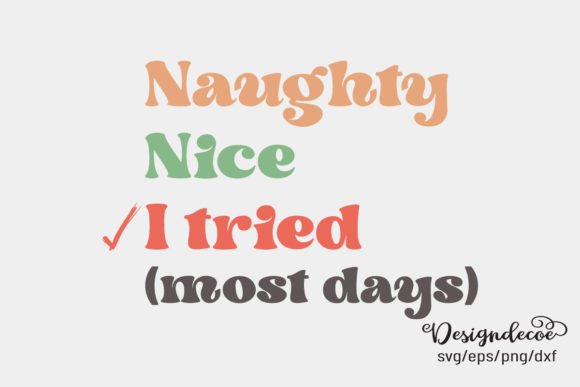
The design leans heavily into the retro groovy aesthetic, characterized by warped typography and fluid, organic shapes. For an embroidery project, this presents both an opportunity and a challenge. The "wavy" nature of the text creates a dynamic visual flow that catches the eye, but it also demands careful attention to stitch direction. When I visualize this on a finished product, I see it working best on items that allow for a bit of whimsy. It is not a stiff, corporate logo; it is a conversation starter. The layout feels balanced, with enough negative space to prevent the design from looking cluttered once stitched out. This visual personality makes it ideal for holiday embroidery that wants to step away from traditional red and green rigidity.
Real-World Application: The Custom Sweatshirt Test
To truly evaluate this asset, I imagined a specific client scenario: a small boutique owner looking for unique custom apparel for the holiday season. She wanted something that felt personal but not overly sentimental. I pictured the Naughty Nice I Tried Retro Groovy SVG centered on the chest of a high-quality, heavyweight cotton sweatshirt. In this context, the design shines. The bold lines translate well into satin stitches or dense fill stitches, providing a tactile quality that customers love to touch.
However, the transition from screen to needle requires foresight. Because the design includes curved elements, I would recommend using a cut-away stabilizer rather than tear-away to ensure the fabric does not pucker around the curves. The result would be a handmade product that looks professional and holds up to wear. This is not just a digital file; it is the blueprint for a tangible personalized gift that carries emotional weight.
Navigating Fabric and Hoop Constraints
One of the most critical aspects of using any machine embroidery design is understanding its limitations. While the product description notes that the file is easy to resize, we must be realistic about physics. If you attempt to shrink this design too much for a small hoop size, such as a 4x4 inch hoop, the finer details of the retro lettering may become lost. The stitches could merge, turning legible text into a blob of thread.
Conversely, on textured fabrics like terry cloth towels or fluffy fleece blankets, the design needs sufficient density to stand out. I would advise testing the stitch density on scrap fabric first. For dark fabrics, consider using a lighter thread color or adding a white underlay to ensure the groovy vibes pop against the background. On stretchy fabrics, such as those used for baby clothes, the stability of the design is paramount. A poorly stabilized baby embroidery project can lead to distortion after washing, which damages brand reputation.
Commercial Viability for Etsy Sellers and Crafters
For the Etsy seller or creative entrepreneur, this design offers significant versatility. It fits seamlessly into the niche of humorous holiday decor. Imagine this stitched onto a kitchen towel as a tote bag design companion, or applied as an embroidered patch on a denim jacket. The retro style is currently trending, which means higher buyer engagement and potential for premium pricing.
However, commercial use requires diligence. The product description mentions it includes EPS, SVG, DXF, and PNG files. As an embroidery professional, I know that these are vector and raster graphics formats, not native embroidery machine files like PES or DST. This means you, the designer, must digitize the SVG into an embroidery file yourself or use auto-digitizing software with caution. Auto-digitizing often fails to account for pull compensation and stitch angles, leading to poor quality. If you are selling small shop products, investing time in proper digitization or hiring a digitizer is crucial to maintain professionalism.
Technical Considerations and Best Practices
Before committing to a full production run, there are several practical steps every designer should take with the Naughty Nice I Tried Retro Groovy SVG:
- Test on Scrap Fabric: Always stitch a sample on the same material you intend to use for the final product. This reveals issues with tension and density.
- Check Thread Contrast: The groovy style relies on readability. Ensure your thread colors contrast sufficiently with the fabric base.
- Inspect Small Details: Zoom in on the vector file. Are there tiny anchor points that might cause needle breaks? Clean up the vector paths before digitizing.
- Verify Licensing: The description notes it is a sublimation download. Confirm whether the license allows for commercial sale of physical embroidered items. Never assume; always read the terms.
- Mockup Testing: Use the included PNG transparent files to create printable mockups. Place the design on various backgrounds to see how it interacts with different colors and textures.
Enhancing Brand Consistency and Value
Using a cohesive design language helps build trust. If your brand focuses on retro, playful, or nostalgic themes, this design reinforces that identity. It adds value to your design assets library by offering a ready-made concept that can be adapted across multiple products. Whether it is a holiday embroidery piece for a family gathering or a quirky addition to a custom apparel line, consistency in style makes your shop recognizable.
The visual appeal of this design lies in its imperfection—the hand-drawn feel of the groovy letters. In embroidery, this translates to a human touch that machines alone cannot replicate without careful programming. By paying attention to stitch types, such as using running stitches for outlines and fill stitches for larger areas, you can enhance the handmade presentation. This level of detail signals quality to the buyer, fostering customer trust and encouraging repeat business.
Final Thoughts on Practical Use
The Naughty Nice I Tried Retro Groovy SVG is more than just a graphic; it is a tool for storytelling through thread. It performs best when treated with respect for the medium of embroidery. It is not a plug-and-play solution for every machine, but rather a canvas for skilled crafters to demonstrate their expertise. For those willing to put in the work to digitize and test properly, it offers a high-return asset for holiday collections and year-round novelty items. Remember, the success of the final product depends less on the file format and more on the craftsmanship applied to it. Treat it as a partner in your creative process, and it will deliver results that delight your customers and elevate your brand.